
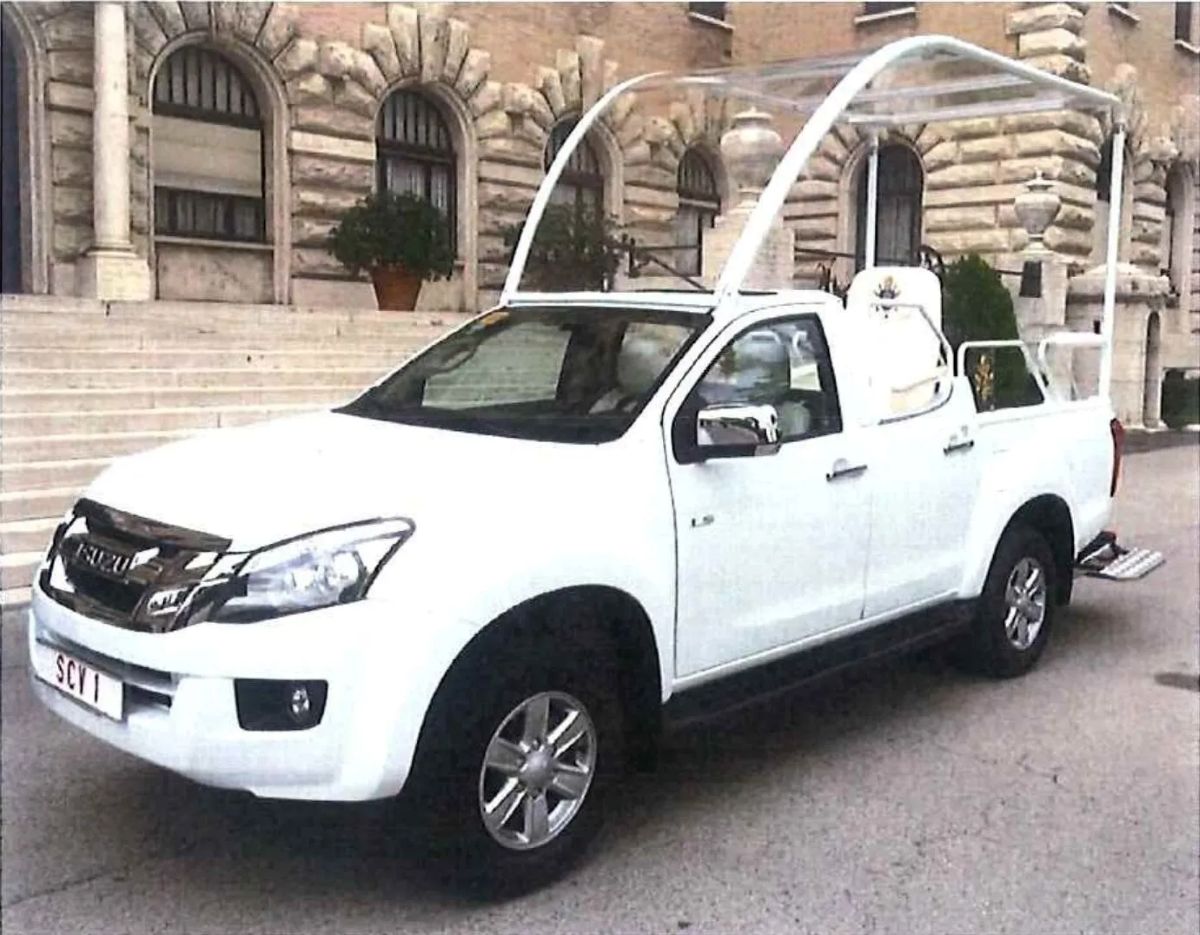
El Santo Padre usará el conocido vehículo en los actos multitudinarios. Uno de ellos llegará a Madrid desde Roma y, al finalizar la etapa en la capital, viajará a Gran Canaria; el segundo llegará desde la ciudad italiana hasta Barcelona, desde donde será trasladado a Tenerife.
Efectivos del Ejército del Aire y del Espacio serán los encargados de trasladar los vehículos entre las distintas ciudades, en coordinación con la organización del viaje y los responsables de seguridad del Vaticano.
Junto con los papamóviles, el Papa también usará tres vehículos eléctricos tipo buggy para los actos de dimensiones más reducidas. Uno de ellos se está fabricando en Burgos; otro está siendo modificado directamente en Canarias y el tercero llegará a Barcelona desde Roma.
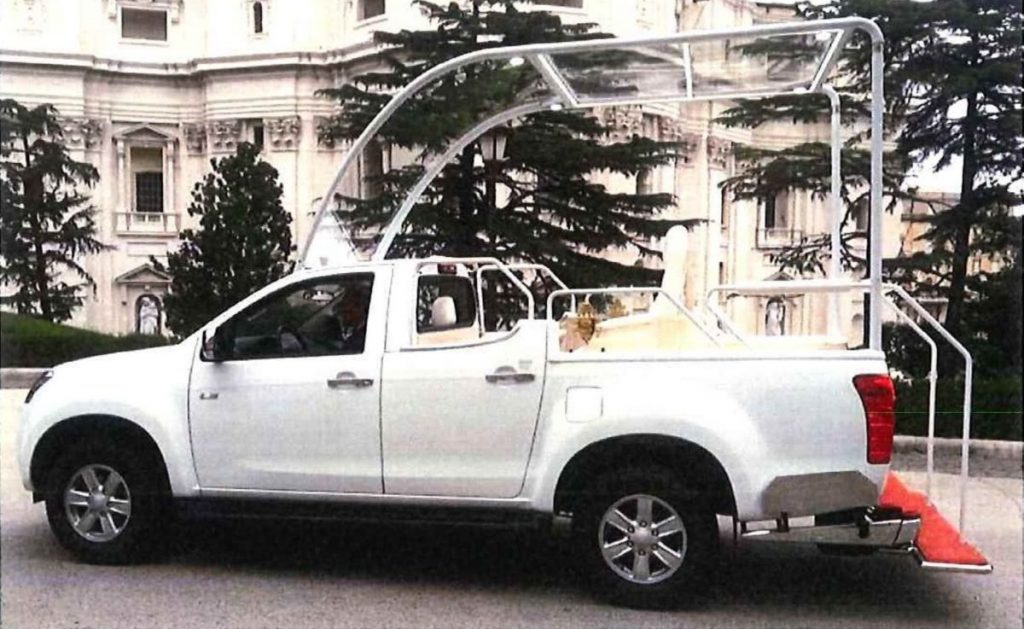
El Papa León XIV contará con dos papamóviles llegados desde Roma para los distintos actos públicos de su Viaje Apostólico a España, que se celebrará del 6 al 12 de junio en Madrid, Barcelona y las Islas Canarias.
El traslado de los vehículos se realizará con la colaboración del Ejército del Aire y del Espacio, cuyos efectivos coordinarán el dispositivo logístico junto a la organización del viaje y los responsables de seguridad del Vaticano.
Un avión de la Fuerza Aérea española viajará desde Roma transportando los dos papamóviles y uno de los vehículos eléctricos tipo buggy que utilizará el Santo Padre durante su estancia en España. La aeronave realizará una primera escala en Barcelona, donde serán descargados uno de los papamóviles y el buggy destinado a los actos previstos en la ciudad condal.
Tras completar la etapa en Barcelona, el papamóvil utilizado allí —que será un modelo Isuzu— será posteriormente trasladado a Tenerife.
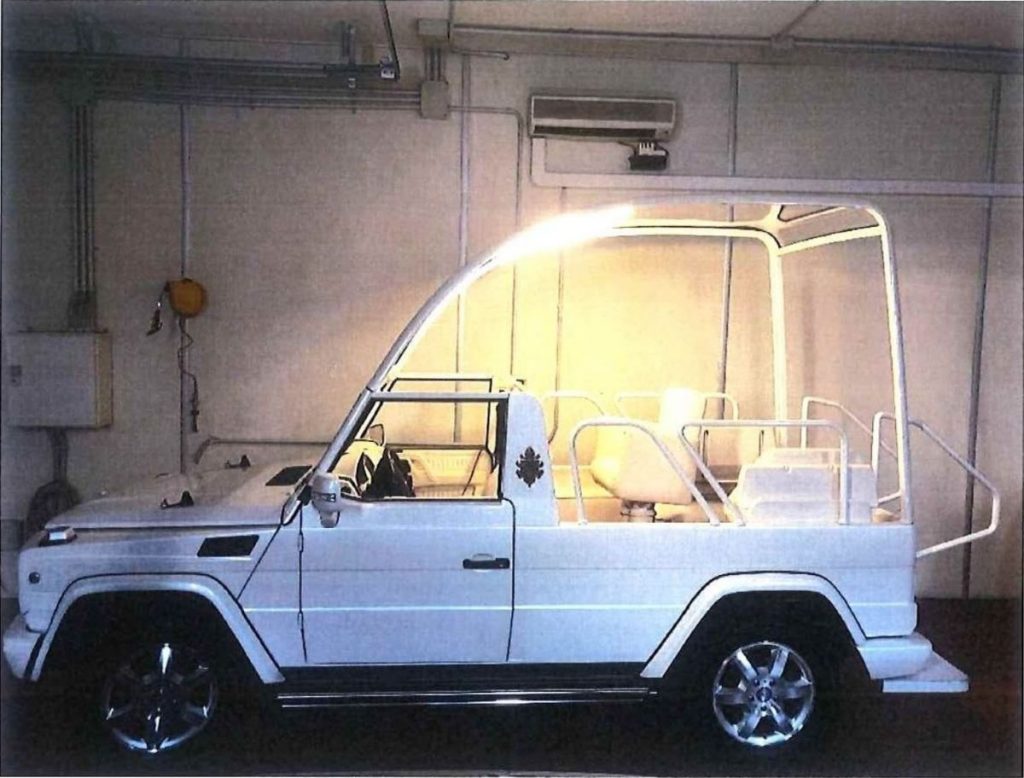
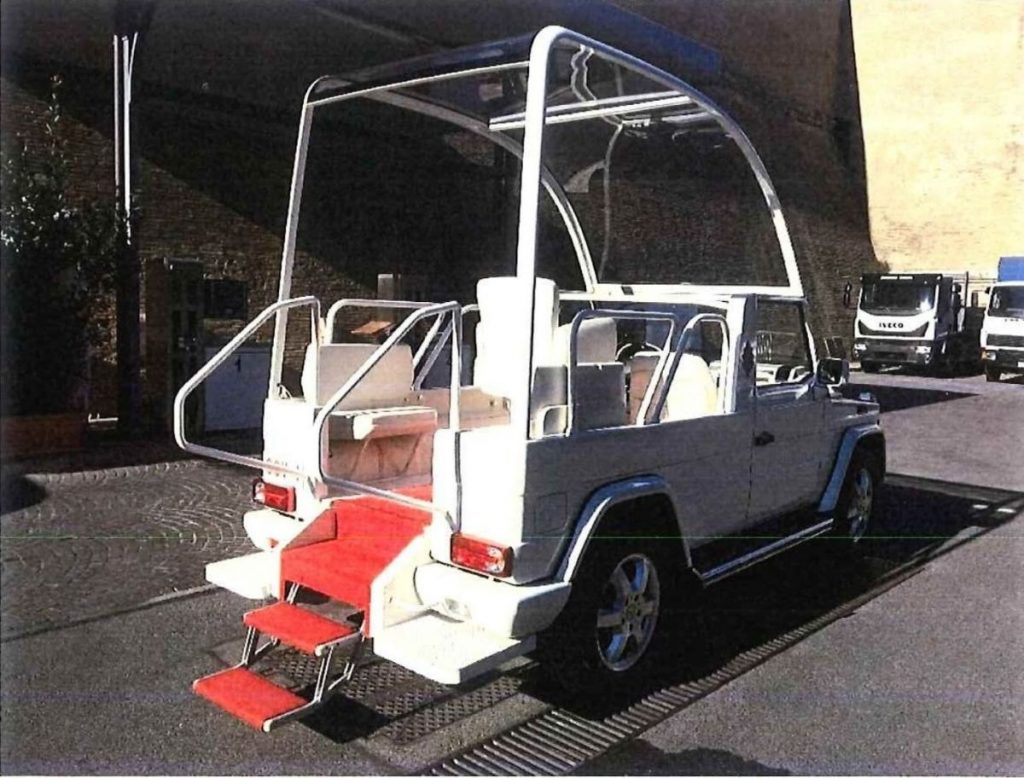
Después de la escala en Barcelona, el avión continuará hasta Madrid, donde se descargará el segundo papamóvil que acompañará al Papa León XIV durante los actos previstos en la capital española. Este vehículo será un Mercedes 500.
Una vez concluida la etapa madrileña del Viaje Apostólico, este vehículo será embarcado en un avión militar y trasladado hasta Gran Canaria, donde el Santo Padre continuará su programa pastoral. Posteriormente, tras finalizar los actos en Gran Canaria, el segundo papamóvil será llevado también a Tenerife. Desde allí, ambos vehículos regresarán finalmente a Roma.
Además de los dos papamóviles, el Papa utilizará tres vehículos eléctricos tipo buggy, especialmente acondicionados para desplazamientos en espacios cerrados o encuentros pastorales de dimensiones más reducidas, favoreciendo así la cercanía con los participantes.
Uno de estos vehículos está siendo fabricado en Burgos por GreenMowers, para su utilización en el estadio Santiago Bernabéu. El segundo buggy será el trasladado desde Roma a Barcelona, mientras que el tercero está siendo desarrollado directamente en Tenerife siguiendo planos facilitados por el Vaticano.
Estos vehículos permitirán facilitar los desplazamientos del Santo Padre en recintos interiores y reforzar la proximidad con los fieles durante diversos encuentros previstos en el programa del viaje.
Breve historia de un vehículo simbólico
El vehículo abierto que hoy reconocemos como papamóvil —blanco, elevado, pensado para que el pontífice se asome a la multitud— nació en los años setenta, cuando los grandes viajes apostólicos exigieron un transporte específicamente concebido para el contacto con el pueblo.
Según los Museos Vaticanos, el primer “papamóvil”, o más bien el vehículo todo terreno blanco utilizado por el pontífice para trayectos breves y para ser visto por las multitudes, apareció inmediatamente después del Jubileo de 1976 y fue usado de forma esporádica por Pablo VI, aunque entonces todavía no se le llamaba así.
Aquel primer ejemplar fue un Toyota Land Cruiser, al que siguió un Fiat Campagnola que el mundo entero recordaría por motivos trágicos cuando, el 13 de mayo de 1981, Mehmet Ali Ağca disparó contra San Juan Pablo II mientras recorría la plaza junto a los fieles, a bordo del Campagnola descubierto.
Desde entonces, los vehículos papales incorporaron blindaje y, sobre todo, una cúpula de cristal antibalas que los protegía sin restar visibilidad, dándoles la icónica apariencia que hoy conocemos.
La evolución posterior ha buscado equilibrar seguridad y cercanía —de los Mercedes Clase G a los Fiat, Seat, Ford o Hyundai adaptados en cada visita—, con un giro reciente hacia la sostenibilidad, que el propio León XIV ha asumido apostando por la electrificación de la flota vaticana.
Junto a la versión blindada coexiste, también, una segunda tipología que recupera el espíritu del Campagnola y que el público asocia con las grandes audiencias romanas: el jeep abierto o vehículo tipo buggy, sin cúpula y con pasamanos, pensado para que el pontífice circule de pie entre la multitud.
En la plaza de San Pedro este papel lo cumple un jeep abierto, blanco, equipado con parabrisas plegable y pasamanos, en el característico “blanco místico Vaticano”, ya utilizado por Benedicto XVI en 2007 y heredado después por Francisco, que les dio a los vehículos su gesto personal al renunciar al blindaje por considerar que el cristal blindado le separaba de la gente. León XIV ha mantenido las dos opciones, y ambas podrán verse en su Viaje a España: la cúpula cuando lo aconseja la seguridad, el descapotado cuando manda la cercanía.
The Pope will use two popemobiles and three electric vehicles during his Apostolic Journey to Spain
The Holy Father will use the well-known vehicle during large public events. One of them will arrive in Madrid from Rome and, after the conclusion of the capital’s stage of the visit, will travel to Gran Canaria; the second will arrive from the Italian city to Barcelona, from where it will be transferred to Tenerife.
Personnel from the Spanish Air and Space Force will be responsible for transporting the vehicles between the different cities, in coordination with the organizers of the trip and the Vatican security officials.
Alongside the popemobiles, the Pope will also use three electric buggy-type vehicles for smaller-scale events. One of them is being manufactured in Burgos; another is being modified directly in the Canary Islands; and the third will arrive in Barcelona from Rome.
Pope Leo XIV will have two popemobiles arriving from Rome for the various public events of his Apostolic Journey to Spain, which will take place from June 6 to 12 in Madrid, Barcelona, and the Canary Islands.
The transportation of the vehicles will be carried out with the collaboration of the Spanish Air and Space Force, whose personnel will coordinate the logistical operation together with the trip organizers and Vatican security officials.
A Spanish Air Force aircraft will travel from Rome carrying the two popemobiles and one of the electric buggy-type vehicles that the Holy Father will use during his stay in Spain. The aircraft will make an initial stop in Barcelona, where one of the popemobiles and the buggy designated for the events scheduled in the Catalan capital will be unloaded.
After the Barcelona stage is completed, the popemobile used there —an Isuzu model— will subsequently be transferred to Tenerife.
After the stop in Barcelona, the aircraft will continue to Madrid, where the second popemobile, which will accompany Pope Leo XIV during the events scheduled in the Spanish capital, will be unloaded. This vehicle will be a Mercedes 500.
Once the Madrid stage of the Apostolic Journey has concluded, this vehicle will be loaded onto a military aircraft and transported to Gran Canaria, where the Holy Father will continue his pastoral program. Later, after the events in Gran Canaria have concluded, the second popemobile will also be taken to Tenerife. From there, both vehicles will finally return to Rome.
In addition to the two popemobiles, the Pope will use three electric buggy-type vehicles, specially adapted for transportation in enclosed spaces or for smaller pastoral gatherings, thereby fostering greater closeness with participants.
One of these vehicles is being manufactured in Burgos, in collaboration with GreenMowers, for use at Santiago Bernabéu Stadium. The second buggy will be the one transported from Rome to Barcelona, while the third is being developed directly in Tenerife according to plans provided by the Vatican.
These vehicles will facilitate the Holy Father’s movements within indoor venues and reinforce his proximity to the faithful during various events included in the travel program.
A Brief History of a
Symbolic Vehicle
The open vehicle that we now recognize as the popemobile —white, elevated, and designed to allow the pontiff to be seen by the crowd— was born in the 1970s, when major apostolic journeys required a mode of transportation specifically conceived for contact with the people.
According to the Vatican Museums, the first “popemobile,” or rather the white off-road vehicle used by the pontiff for short journeys and to be seen by large crowds, appeared immediately after the 1976 Jubilee and was used sporadically by Pope Paul VI, although it was not yet called by that name.
That first example was a Toyota Land Cruiser, followed by a Fiat Campagnola that the entire world would remember for tragic reasons when, on May 13, 1981, Mehmet Ali Ağca shot Saint John Paul II as he traveled through the square among the faithful aboard the open Campagnola.
From that point on, papal vehicles incorporated armor and, above all, a bulletproof glass enclosure that protected the Pope without reducing visibility, giving them the iconic appearance we know today.
Subsequent developments have sought to balance security and closeness —from Mercedes G-Class models to Fiat, Seat, Ford, and Hyundai vehicles adapted for individual visits— with a recent shift toward sustainability that Leo XIV himself has embraced by supporting the electrification of the Vatican fleet.
Alongside the armored version, there also exists a second type that recaptures the spirit of the Campagnola and that the public associates with major Roman audiences: the open jeep or buggy-type vehicle, without an enclosure and equipped with handrails, designed to allow the pontiff to travel standing among the crowd.
In St. Peter’s Square, this role is fulfilled by a white open jeep equipped with a foldable windshield and handrails, painted in the characteristic Vatican white, already used by Pope Benedict XVI in 2007 and later inherited by Pope Francis, who gave the vehicles his personal touch by renouncing the use of armor because he believed that bulletproof glass separated him from the people. Leo XIV has maintained both options, and both will be seen during his Journey to Spain: the enclosed version when security considerations require it, and the open version when closeness takes precedence.